


How to Invest Money for Beginners – Smart Investment Guide
How to Invest Money for Beginners
A lot of people think investing is only for rich families, Wall Street traders, or tech workers making absurd salaries before turning 28.
Not true
Regular Americans invest every day
Teachers
Truck Drivers
Nurses
Office Workers
Freelancers
Restaurant Managers
The real difference is this:
Some people start early.
Others wait too long because investing feels confusing
And honestly, the financial industry deserves part of the blame. Investment advice often sounds like it was written by robots wearing expensive suits inside conference rooms full of charts nobody actually enjoys looking at
The basics are simpler than people think
You put money into assets that can grow over time
Thats it
The hard part is staying patient while the internet screams about ‘hot stocks’ every 14 minutes.
Why Investing Matters Now More than Ever
Saving money alone usually isn’t enough anymore
Inflation slowly eats purchasing power over time
A person leaving all their money sitting inside a low interest savings account for decades often loses long-term growth opportunities badly
Investing helps money grow faster than inflation over long periods
That growth matters because retirement became expensive
Housing Finance Expensive
Healthcare became Expensive
Pretty much everything became expensive except maybe the emotional value of forgotten gym memberships
So investing became less optional for long-term financial stability
What Investing Actually Means
Investing means buying assets that may increase in value or generate income later.
Common investment types include:
- Stocks
- ETFs
- Index Funds
- Bonds
- Real Estate
- Retirement Accounts
Some investments grow slowly
Some move aggressively
Some become risky enough to destroy sleep quality temporarily
Beginners usually do better starting simple
Very simple
The Biggest Beginner Investing Mistake
People wait forever trying to become ‘ready’
The watch videos
Read articles
Open investing apps
Close investing apps
Panic after reading Reddit comments from strangers named things like ‘CryptoWolf247’
Years disappear
Time matters massively in investing because compound growth rewards consistency
Starting early often matters more than starting with huge amounts
How Compound Growth Works
Compound growth means your money earns returns, then those returns also start earning returns later.
Small investments can become surprisingly large over long periods
Money grows faster when growth keeps stacking over many years
That’s why investors constantly talk about time
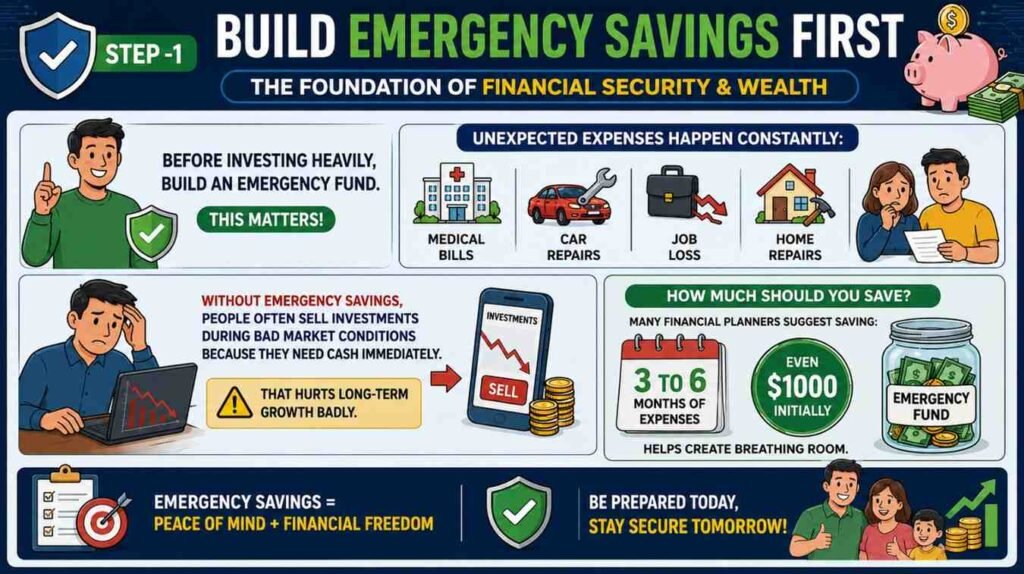
Step -1 : Build Emergency Savings First
Before investing heavily, build an emergency fund
This matters
Unexpected expenses hapen constantly:
- Medical Bills
- Car Repairs
- Job Loss
- Home Repairs
Without emergency savings, people often sell investments during bad market conditions because they need cash immediately
That hurts long-term growth badly
Many financial planners suggest saving:
- 3 to 6 months of expenses
Even $1000 initially helps create breathing room.
Step – 2 : Pay Down High-Interest Debt
Credit card interest destroys wealth fast
A person earning 8% investment returns while paying 28% credit card interest usually loses financially overall
High-interest debt should get serious attention before aggressive investing
Especially credit cards
Those interest rates sometimes look like numbers invented during emotional negotiations between banks and chaos itself
Step – 3 : Open an Investment Account
Beginners usually start through:
- Brokerage accounts
- Roth IRAs
- 401(k) plans
Each works differently
What is Brokerage Account?
This is regular investment account allowing people to buy assets like:
- Stocks
- ETFs
- Mutural Funds
Brokerage accounts stay flexible beause money can usually be withdrawn anytime.
Taxes apply differently compared to retirement accounts though
Popular US brokerage platforms include:
- Fidelity
- Charles Schwab
- Vanguard
- Robinhood
- E*TRADE
Apps made investing dramatically easier than previous generations experienced.
Your grandparents needed phone calls and paperwork
You can now buy investments while standing inside a grocery line deciding whether eggs became luxury products
What is a Roth IRA?
A Roth IRA is a retirement account with tax advantages
People contribute after-tax money, then qualified withdrawals later may become tax-free
That’s why younger investors often love Roth IRAs
Future tax-free growth becomes powerful over decades
Contribution limits exist each year though
What is a 401(k)?
Many employers offer 401(k) retirement plans
Some companies match employee contributions
That match matters enoromously
If your employer matches 5% and you ignore it completely, you’re basically walking past free money while pretending nothing happened
Step – 4 : Understand Stocks
Stocks represent ownership shares in companies
When people buy stock in companies like:
- Apple
- Microsoft
- Amazon
- Tesla
They own tiny pieces of those businesses

Stock prices move constantly based on:
- Company performance
- Economic conditions
- Investor emotions
- News
- Interest rates
And yes, investor emotions move markets constantly
Human panic beautifully during market drops.
Individual Stocks can Become Risky
Some beginners buy random trendy stocks hoping for fast riches.
That strategy hurts people constantly
One company can collapse unexpectedly
Bad leadership decisions happen
Industries change quickly
Even large companies struggle sometimes
That’s why diversification matters.
What Diversification Means
Diversification spreads investments across multiple assets instead of etting everything on one thing.
Think about it like this:
If one company struggles, other investments may still perform well
That reduces overall risk
Many beginners accidentally gamble instead of invest because they chase viral stock tips online
Usually ends badly
ETFs Became Extremely Popular
ETF means Exchange-Traded Fund
These funds bundle many investments together
One ETF might contain hundreds of companies
That makes diversification easier instantly
Popular ETFs often track large indexes like the S&P 500.
A beginner buying one broad-market ETF gains exposure to many major American companies at once.
Simple, Efficient, Lower Stress
Index Funds work well for Beginners
Index funds track market indexes instead of trying to beat them aggressively
A lot of experienced investors actually prefer this approach long term
Why ?
Because many actively managed funds fail to outperform the broader market consistently after fees
That surprises beginners constantly
Professional fund managers don’t magically win all the time
Markets remain brutally competitive
How much Money Beginners need to Start
This part changed massively
Years ago investing sometimes required larger amounts
Now many platforms allow:
- Frictional shares
- Small automatic investments
- Zero-commission trades
Some beginners start with:
- $20 weekly
- $50 monthly
- $100 per paycheck
Consistency matters more than dramatic starting amounts
People underestimate how powerful regular investing becomes after 10 or 20 years.
Risk Tolerance Matters
Some people panic watching investments drop 5%
Others barely react
Your emotional response matters because investing always involves some volatility.
Markets rise
Markets fall
News cycles become dramatic
Financial media behaves like caffeine-fueled theater during downturns
Beginners should avoid investments causing constant anxiety
Bad emotional decisions destroy portfolios
Long-Term Investing Usually Works Better
Day trading attracts attention online
Most beginners should avoid it
Seriously:
Professional traders spend years studying markets fulltime. Eveny monday professionals struggle consistently
Long-term investing generally works better for average people because:
- Fees stay lower
- Stress decreases
- Emotional mistakes reduce
- Compound growth gets time to work
Patience looks boring online
Still powerful
Dollar-Cost Averaging Helps Beginners
This strategy means investing fixed amounts regularly regardless of market conditions.
Example:
- $200 monthly into an ETF
Sometimes prices are high
Sometimes low
Over time this reduces emotional timing mistakes
Because timing markets consistently is extremely difficult
People think they’ll buy low and sell high perfectly
Reality usually looks messier
Much messier
Bonds for Beginners
Bonds work differently from stocks
When you buy bonds, you’re basically lending money to governments or companies in exchange for interest payments
Bonds usually carry lower risk than stocks
But growth potential often stays lower too
Older investors sometimes increase bond exposure because stability matters more closer to retirement
Real Estate Investing
A lot of Americans love real estate because properties feel tangible
You can physically see the investment
Options include:
- Rental Properties
- REITs
- Real Estate Crowdfunding
Rental properties create cash flow potential but also require management
Tenants
Repairs
Maintenance
Property taxes

Owning rental property sounds glamorous until a water heater explodes during a holiday weekend
Investment Scams Target Beginners Constantly
Scammers love inexperienced investors
Common scams include:
- Guaranteed return promises
- Fake crypto schemes
- ‘Secret trading systems’
- Pump-and-dump stocks
If someone promises enormous profits with no risk, run away immediately
Real investing always carries risk
Always.
Taxes Matter When Investing
Beginners often ignore taxes completely
Bad idea
Investment taxes may involve:
- Capital gain taxes
- Dividend taxes
- Retirement account rules
Holding investments longer than 1 year often creates lower long-term capital gains tax rates compared to short-term trading
That’s one reason long-term investing stays attractive.
Emotional Investing Destroys Returns
This happens constantly
Markets drop
People panic
They sell everything
Then markets recover later and those same investors miss the rebound
Fear and greed drive terrible financial decisions repeatedly
That pattern has existed for decades
Probably always will
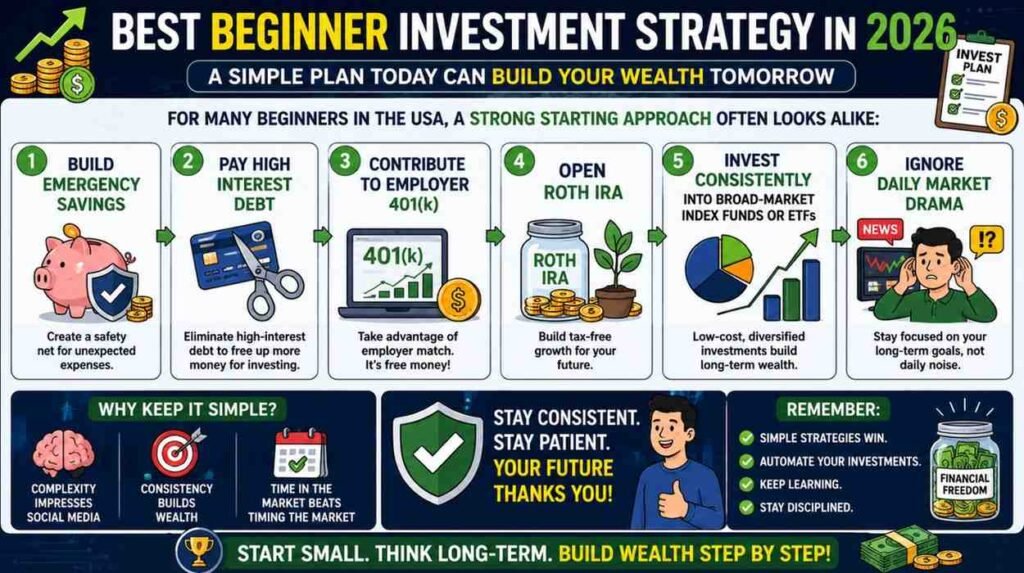
Best Beginner Investment Strategy in 2026
For many beginners in the USA, a strong starting approach often looks alike:
- Build Emergency Savings
- Pay High Interest Debt
- Contribute to Employer 401(k)
- Open Roth IRA
- Invest Consistently into broad-market Index Funds or ETFs
- Ignore daily market drama
Simple strategies often outperform complicated ones because people actually stick with them
Complexity impresses social media
Consistency builds wealth.
Common Beginner Investing Mistakes
Chasing Hype
People constantly chase whatever exploded recently
Meme Stocks
Crypto Manias
Random AI Companies
Buying after massive hype usually increases risk dramatically
Checking Portfolios Obsessively
Watching investments every hour increases stress without improving long-term results
Markets move constantly
That’s normal
Investing Money Needed Soon
Short-tem money generally shouldn’t enter volatile investments
Rent money and emergency savings need stability
Ignoring Fees
Fees quietly reduce long-term growth
Even small percentage differences matter heavily over decades
Low-cost index funds became popular partly because of this
Retirement Investing Changed for Younger Americans
Previous generations often relied heavily on pensions
Many workers today depend primarily on personal investing instead
That responsibility shifted onto individuals
Which honestly explains why investing education matters more now
People need basic financial knowledge earlier in life
Schools still don’t teach enough of it
Investing Apps Changed Behavior
Apps made investing accessible
That’s mostly good
But constant notifications and flashy interfaces also turned investing into entertainment for some users
That creates problems
Investing works better when treated like long-term financial planning instead of a casino attached to a smartphone
How to Stay Consistent as a Beginner Investor
The strongest beginner habit is automation
Automatic investing removes emotional hesitation
Money gets invested regularly without needing constant motivation
That matters because humans are extremely talented at procrastinating important financial decisions while simultaneously researching completely unnecessary purchases for 3 hours online
Automation reduces that problem
How to Invest Money for Beginners Successfully
Successful beginner investing usually looks less exciting than social media promises
No rented supercars
No overnight millions
No mysterious ‘wealth secrets’
just:
- Consistent investing
- Patience
- Reasonable risk
- Long-term thinking
That approach built more real wealth than internet hype ever will
And honestly, beginners who stay calm during market volatility already place themselves ahead of many investors emotionally
Because markets always fluctuate
That part never changes
The people who survive long-term usually keep investing anyway.
Frequently Asked Questions
- How can beginners start investing money?
Beginners can start by building emergency savings, paying down high interest debt, opening an investment account and investing cosistently in suitable assets. - How much money do I need to start investing?
You do not need a large amount. The article gives examples such as $20 per week, $50 per month or $100 per paycheck. Consistency is more important than starting with a large amount. - What should I do before investing?
Build an emergency fund first and consider paying down high-interest debt, especially credit card debt. The article suggests keeping around 3-6 months of expenses as emergency savings. - What are the best investments for beginners?
The article highlights broad market ETFs and index funds as simple options for beginners because they can provide diversification across many companies. - What is the difference between stocks, ETFs and index funds?
Stocks represent ownership in individual companies. ETFs bundle multiple investments into one fund, while index funds track a market index rather than trying to actively beat it. - What is dollar cost averaging?
Dollar cost averaging means a fixed amount regularly regardless of market conditions. For example, the article uses $200 per month into an ETF as an example. - Is long term investing better for beginners?
The article recommends long term investing for most beginners because it reduces emotional decisions, keeps costs manageable and gives compound growth more time work. - Should beginners invest in individual stocks?
Individual stocks can carry higher risk because one company’s performance can deteriorate unexpectedly. The article recommends diversification rather than putting everything into one company or following viral stock tips. - Can beginners invest through a 401(k) or Roth IRA?
Yes, the article identifies 401(k) plans, Roth IRAs and brokerage accounts as common starting points for U.S. investors. A Roth IRA offers tax advantages, while some employers provide matching contributions through 401(k) plans. - What is biggest mistake beginners should avoid?
Avoid chasing hype, checking your portfolio constantly, investing money you need soon, ignoring and making emotional decisions during market declines.
Sources & References :-
- Investor.gov/U.S. Securities and Exchange Commission (SEC) – Basic investing, compound growth and investment risk.
- Investor.gov/SEC – Asset allocation and diversification, including ETFs and mutual funds.
- Investor.gov/SEC – ETF structure, diversification, liquidity and investment characteristics.
- FINRA – Dollar cost averaging, its potential benefits and limitations.
- U.S. Department of Labor – 401(k) plans, employer contributions and matching contributions.
- U.S. Department of Labor – Retirement plan investment choices, fees and participant considerations.
For More Updates Please Follow Click Here
Article was Last Updated on 30th August 2026.